

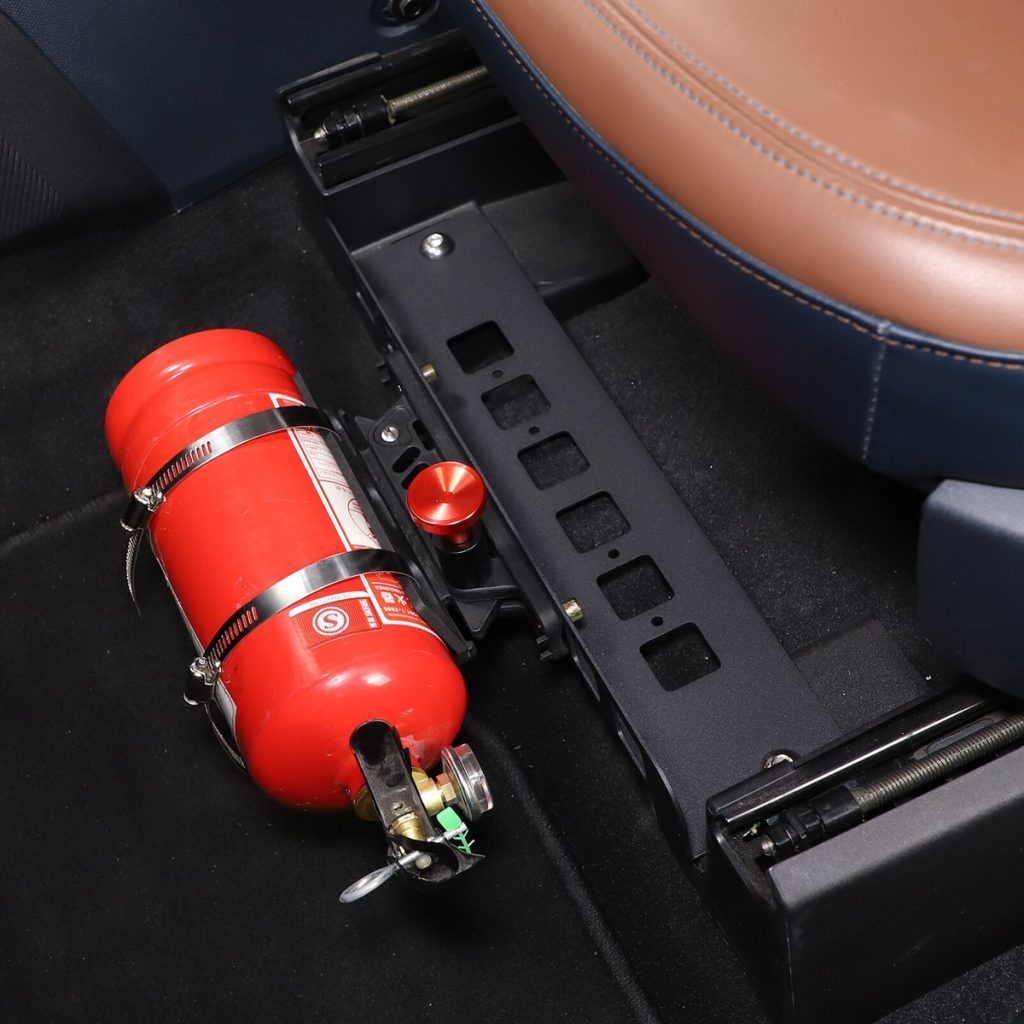
Vehicle fires are rare, but when they happen, they escalate quickly. In most cases, the difference between a controlled incident and a total vehicle loss is measured in seconds, not minutes. Choosing the best auto fire extinguisher is therefore not about ticking a safety box, but about understanding realistic fire scenarios, physical limitations, and how suppression tools actually behave in a confined automotive environment. This article approaches the topic from a practitioner’s point of view, focusing on causes, consequences, and practical trade-offs rather than generic recommendations.
Why vehicle fires start and how they typically progress
Most automotive fires begin with a relatively small ignition source. Common triggers include electrical shorts, fuel leaks near hot surfaces, overheated brakes, or oil contacting exhaust components. In many real-world cases, the initial flame is localized and technically manageable if addressed immediately.
The problem is escalation. Modern vehicles contain large amounts of plastic, insulation, and synthetic materials that burn intensely once involved. After the first 60–120 seconds, radiant heat increases sharply, wiring looms fail, and fire spreads beyond the point where a small extinguisher can be effective. This reality defines what an onboard extinguisher can and cannot do.
What makes an extinguisher suitable for automotive use
Not every fire extinguisher works well inside a vehicle. Space constraints, vibration, temperature swings, and user stress all influence effectiveness. The best fire extinguisher for auto applications balances suppression capability with practicality and reliability.
Key characteristics that matter in real use:
- Fire class coverage suitable for fuel, electrical, and interior materials.
- Compact size that can be securely mounted without becoming a projectile.
- Simple activation, ideally one-handed.
- Minimal residue, reducing post-incident damage when possible.
An extinguisher that is theoretically powerful but awkward to deploy under stress often fails in practice.
Understanding fire classes in a vehicle context
Vehicle fires rarely fit neatly into one fire class. A single incident can involve flammable liquids, energized electrical components, and solid combustibles at the same time. This overlap is why class ratings matter.
Before comparing extinguisher types, it helps to understand what you are realistically dealing with:
- Class A: interior trim, upholstery, wiring insulation.
- Class B: gasoline, diesel, oil, transmission fluid.
- Class C: live electrical systems.
An automotive extinguisher that does not cover at least B and C classes leaves a significant gap in protection.
Common extinguisher types and their real-world trade-offs
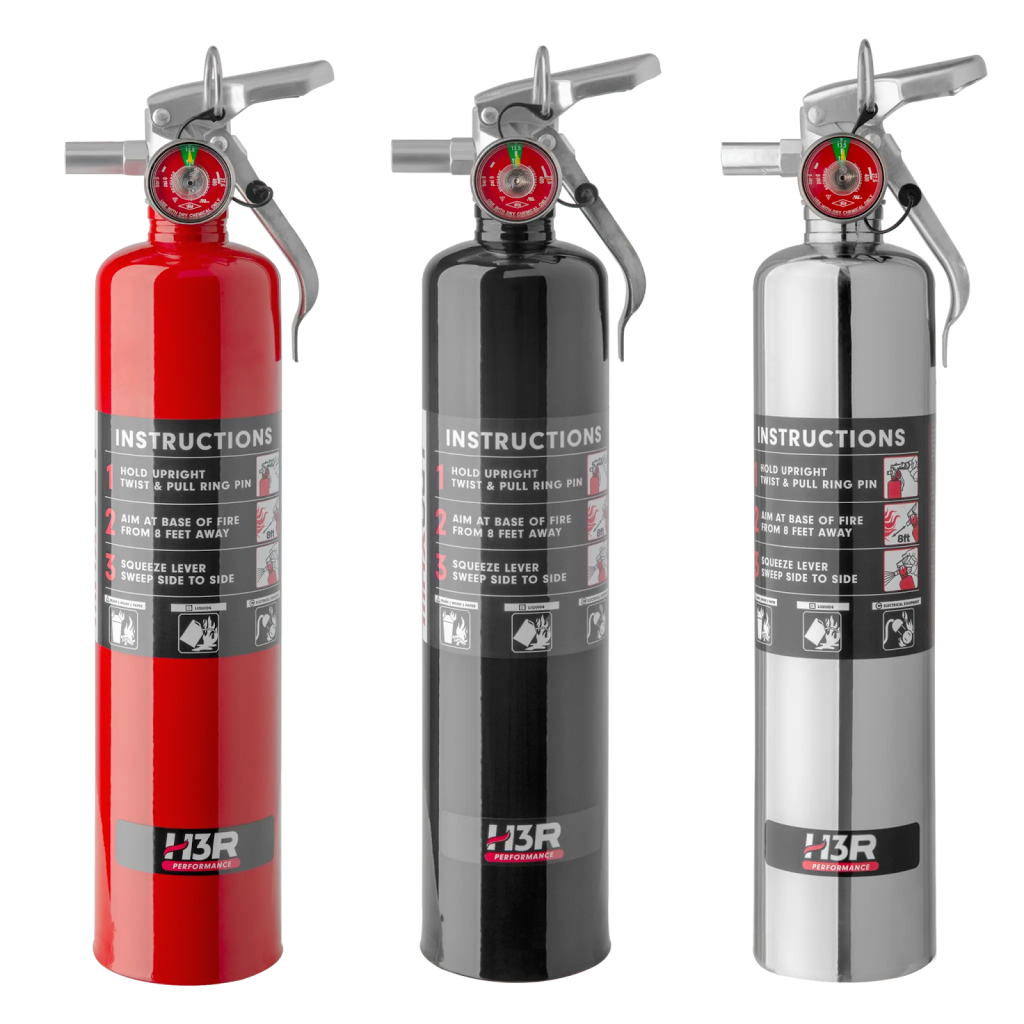
Each extinguisher technology behaves differently once deployed inside a vehicle. Marketing descriptions often overlook secondary effects that matter after the fire is out.
Dry chemical (ABC) extinguishers are widely used because they are effective and affordable. They suppress flames quickly but leave corrosive residue that can damage electronics if not cleaned promptly.
Clean agent extinguishers discharge gas that interrupts combustion without residue. They are gentler on vehicle systems but require precise aim and are less forgiving if the fire has already spread.
Foam-based units are effective on fuel fires and reduce re-ignition risk, but they take up more space and are less common in compact automotive formats.
Size, discharge time, and why “bigger” is not always better
A common assumption is that a larger extinguisher is always safer. In practice, size introduces trade-offs. Larger units offer longer discharge times but are harder to access quickly and more difficult to mount securely.
In most passenger vehicles, extinguishers in the 1–2 lb range represent a realistic balance. They typically provide 8–15 seconds of discharge, which aligns with the time window during which early-stage fires can be controlled. Beyond that point, personal safety should take priority over suppression attempts.
Comparative overview of common auto extinguisher options
The table below summarizes practical differences between common extinguisher types used in vehicles. It is not about ranking, but about matching use cases.
| Extinguisher type | Fire classes covered | Residue impact | Typical size | Practical notes |
| Dry chemical (ABC) | A / B / C | High | Compact | Effective, but cleanup is critical |
| Clean agent | B / C | None | Compact | Clean, requires accurate use |
| Foam | A / B | Moderate | Larger | Good re-ignition control |
| CO₂ | B / C | None | Bulky | Limited effectiveness in open spaces |
This comparison helps clarify why there is no single “perfect” solution for every vehicle and driver profile.
Mounting location: access versus safety
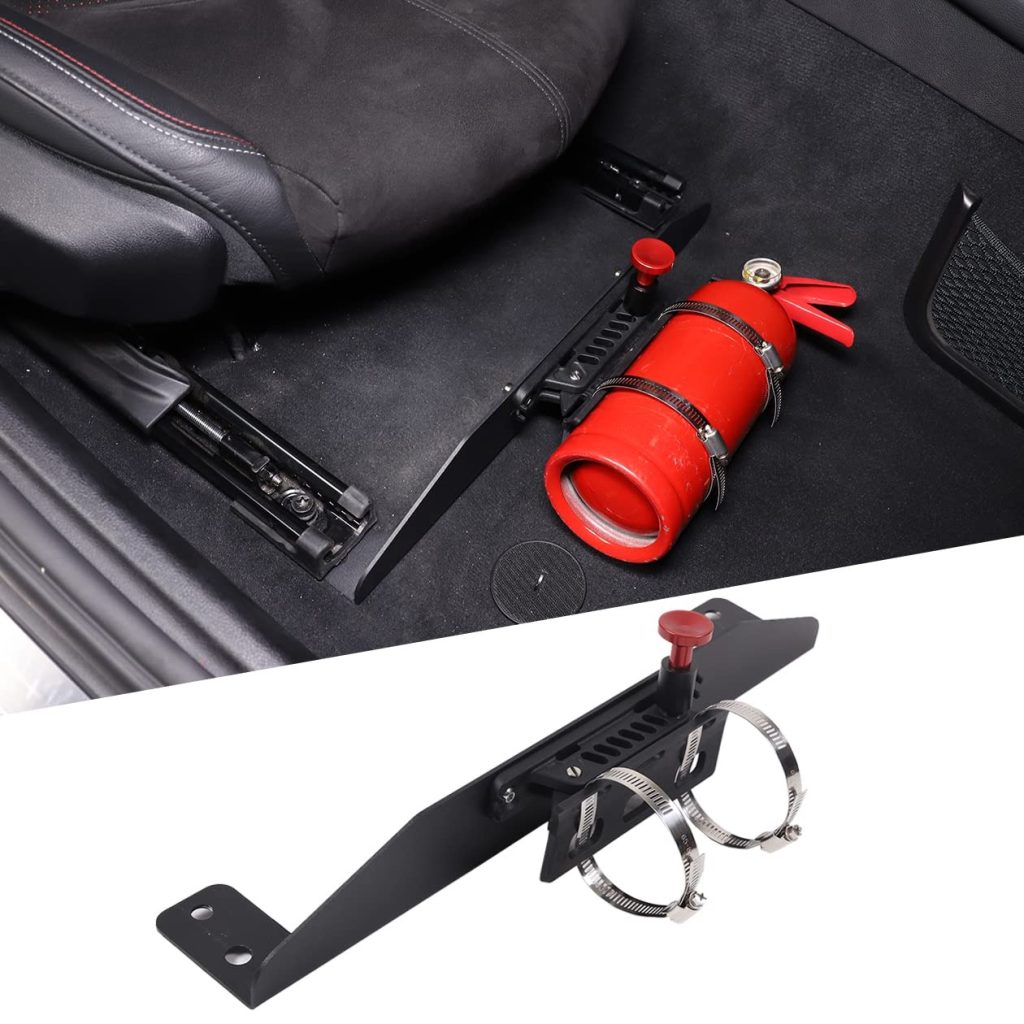
Where the extinguisher is mounted often matters more than which model is chosen. In an emergency, delayed access can make the tool irrelevant.
Common mounting locations include:
- Under the front seat, providing fast access from the driver position.
- Trunk-mounted, safer in a collision but slower to reach.
- Passenger footwell, accessible but must not interfere with pedals.
A poorly secured extinguisher can become a dangerous projectile during hard braking or a crash, so mounting hardware quality is not optional.
Typical user mistakes and their consequences
Many extinguisher failures are not equipment-related but procedural. Stress, panic, and incorrect assumptions all play a role.
Frequent real-world errors include:
- Attempting suppression after the fire has fully involved the engine bay.
- Standing too close, risking flare-up injuries.
- Discharging without cutting engine power when possible.
- Forgetting that extinguishers require periodic inspection.
Understanding these limitations helps set realistic expectations and reduces personal risk.
Maintenance, inspection, and replacement intervals
An onboard extinguisher is not a “fit and forget” item. Temperature extremes inside vehicles accelerate pressure loss and seal degradation over time.
In most cases, visual inspection every few months is sufficient. Look for pressure gauge movement, corrosion, or mounting looseness. Even unused extinguishers may require replacement after several years, depending on manufacturer guidance and storage conditions.
Safety perspective: when not to use an extinguisher
It is important to state the limits clearly. An auto fire extinguisher is designed for incipient-stage fires only. If flames are spreading rapidly, producing dense smoke, or threatening fuel tanks, withdrawal is the safest option.
In professional practice, extinguishers are tools for buying time and limiting damage, not for heroic intervention. Recognizing when to stop is as important as knowing how to start.
Final takeaway: choosing predictability over promises
The best auto fire extinguisher is the one that matches realistic vehicle fire scenarios, is accessible within seconds, and can be deployed instinctively under stress. Absolute guarantees do not exist in fire suppression, especially in automotive environments.
A well-chosen extinguisher provides a measure of stability and predictability in situations where outcomes are otherwise chaotic. Over the long term, this practical preparedness reduces risk exposure, limits damage when incidents occur, and supports safer, more controlled decision-making rather than false confidence.
Comment here