


Evaluating fuel efficiency at the level of a manufacturer requires more than quoting official mileage figures. In practice, fuel consumption is the result of cumulative engineering decisions that interact with real driving patterns, maintenance habits, and vehicle aging. In the case of Mazda, efficiency is approached as a mechanical system problem rather than a software-driven optimization exercise. This distinction explains why Mazda vehicles often deliver stable, predictable fuel usage over time rather than headline efficiency numbers that deteriorate under real-world conditions.
Engineering philosophy behind Mazda’s fuel efficiency strategy

Mazda’s fuel efficiency strategy is built around minimizing energy losses at every stage of vehicle operation instead of relying on a single dominant technology. In most cases, this leads to moderate but repeatable efficiency gains that survive changes in driving conditions and vehicle age. The emphasis is on combustion efficiency, mechanical friction reduction, and mass control, which together create a narrow performance dispersion between laboratory testing and everyday use.
Why incremental efficiency tends to last longer
Incremental efficiency improvements place less stress on individual components and reduce dependency on aggressive calibration. This matters because long-term fuel economy is often lost through secondary effects such as increased friction, thermal imbalance, or control system drift. Mazda’s conservative margins allow efficiency characteristics to remain stable even as tolerances change with mileage.
Skyactiv engines and real-world mileage behavior
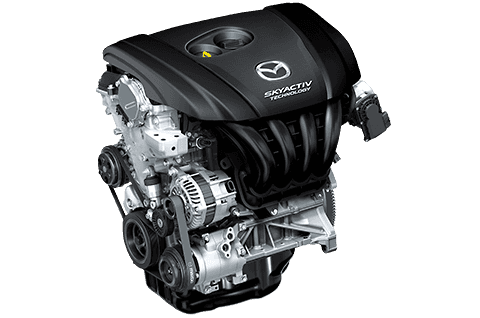
Skyactiv gasoline engines rely on high compression ratios combined with carefully managed combustion timing. In real driving, this configuration tends to reward consistent throttle input while penalizing abrupt load changes. A common observation is that fuel consumption remains relatively stable during mixed urban use, where many turbocharged engines experience disproportionate efficiency losses.
Combustion efficiency versus operational flexibility
High compression increases thermal efficiency but reduces tolerance for poor fuel quality and aggressive driving. Mazda offsets this through precise airflow control and optimized exhaust scavenging, allowing the engine to avoid enrichment under moderate loads. The result is fuel consumption that degrades gradually rather than collapsing under non-ideal conditions.
Lightweight platforms and their impact on consumption stability
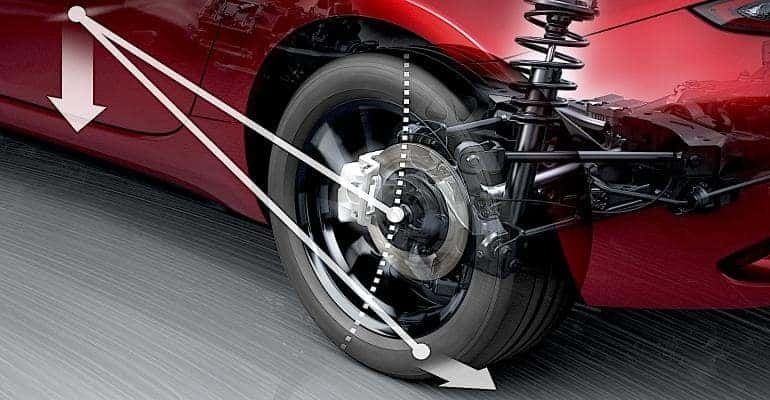
Vehicle mass directly influences how much energy is required for repeated acceleration events, which dominate fuel use in urban environments. Mazda’s lightweight platform philosophy reduces inertia without compromising structural rigidity, helping maintain efficiency where official highway ratings are least representative of actual driving.
Structural stiffness as an efficiency factor
Reducing mass alone is insufficient if chassis stiffness is compromised. Flexing structures alter suspension geometry, increasing rolling resistance and tire wear over time. Mazda’s platform designs maintain alignment stability, which indirectly preserves fuel efficiency as vehicles accumulate mileage.
Transmission calibration and its influence on everyday efficiency
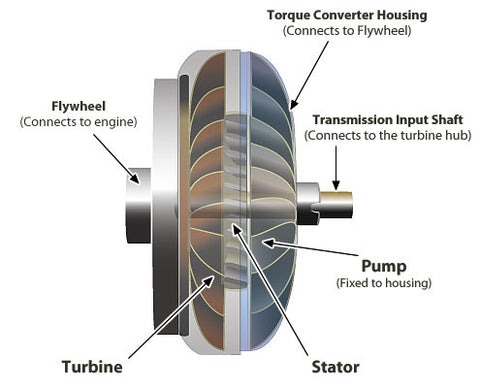
Mazda continues to favor refined automatic transmissions over widespread adoption of CVTs. From an efficiency perspective, this reduces conversion losses during partial load operation and avoids constant ratio hunting. In everyday driving, this produces predictable engine speeds that align well with the optimal efficiency range.
Why calibration matters more than gear count
While multi-ratio transmissions promise theoretical gains, they often introduce control inefficiencies in real traffic. Mazda’s approach prioritizes holding efficient operating points instead of maximizing ratio variation, which in practice reduces unnecessary engine speed fluctuations that consume additional fuel.
Mild hybrid systems and their realistic savings potential
Mazda’s mild hybrid systems are designed to smooth transient loads rather than dramatically reduce baseline consumption. Energy recovered during deceleration supports auxiliary systems and assists engine restarts, reducing short bursts of inefficient fuel use common in traffic congestion.
Limitations drivers should realistically expect
Mild hybrid systems offer their greatest benefit in stop-and-go conditions. On highways, their contribution becomes marginal, which means total fuel savings depend heavily on driving environment. Overestimating their impact is a common source of disappointment among owners expecting hybrid-level reductions.
Comparative efficiency across Mazda’s fuel-efficient models
A comparative overview helps illustrate how Mazda’s efficiency philosophy manifests across different vehicle categories. The table below focuses on usage stability rather than peak mileage figures, which often vary significantly with driving style.
| Vehicle category | Typical efficiency behavior | Best operating conditions | Long-term predictability |
| Compact sedan | Balanced city and highway use | Mixed commuting | High |
| Compact crossover | Slight urban penalty | Suburban driving | Medium-high |
| Mild hybrid hatchback | Stable urban efficiency | Dense traffic | High |
| Mid-size sedan | Highway-optimized | Long-distance travel | Medium |
Driver behavior and its disproportionate impact on efficiency
Mazda powertrains tend to respond directly to driver input, which means fuel economy is strongly influenced by acceleration patterns and braking habits. In most cases, smooth inputs preserve intended efficiency, while aggressive throttle use quickly erodes gains. This sensitivity reflects mechanical transparency rather than calibration weakness.
Common behavior-related efficiency losses
Many drivers assume efficiency losses are unavoidable when they are often behavioral. Short trips, excessive idling, and abrupt acceleration interact with high-compression engines in ways that magnify fuel consumption beyond expectations:
- Frequent rapid acceleration from low speeds.
- Neglected tire pressure and alignment changes.
- Overreliance on hybrid assistance in unsuitable conditions.
Maintenance practices that preserve fuel economy over time
Fuel efficiency degrades gradually when maintenance intervals are stretched or components drift outside specification. Mazda’s relatively simple engine architecture responds well to routine service, particularly ignition and airflow management. When neglected, fuel consumption increases are often misattributed to vehicle age rather than correctable mechanical factors.
Preventive maintenance versus efficiency modifications
Addressing root causes of energy loss is usually more effective than attempting efficiency upgrades. Proper lubrication, clean intake systems, and correct ignition timing restore factory efficiency characteristics more reliably than aftermarket interventions:
- Timely replacement of ignition components.
- Regular inspection of intake and exhaust flow paths.
- Consistent use of specified engine oils.
Cost savings realism and long-term ownership expectations
Fuel savings achieved through Mazda’s efficiency strategy accumulate slowly but consistently. They rarely produce dramatic short-term reductions, yet over extended ownership they contribute to lower operating volatility. Predictable consumption simplifies budgeting and reduces exposure to fuel price fluctuations.
Evaluating efficiency beyond fuel cost alone
Stable fuel efficiency also limits thermal stress and reduces component cycling, which indirectly affects maintenance frequency. These secondary effects often matter more over the lifespan of the vehicle than small differences in official mileage figures.
Conclusion: efficiency built on mechanical consistency
To evaluate the auto company Mazda on fuel-efficient cars accurately, efficiency must be viewed as a long-term characteristic rather than a headline metric. Mazda’s models prioritize mechanical consistency, moderate efficiency gains, and predictable degradation patterns. For owners seeking realistic fuel savings, stable mileage, and manageable ownership costs, this approach offers reliability and transparency without relying on fragile or overly complex solutions.
Comment here