

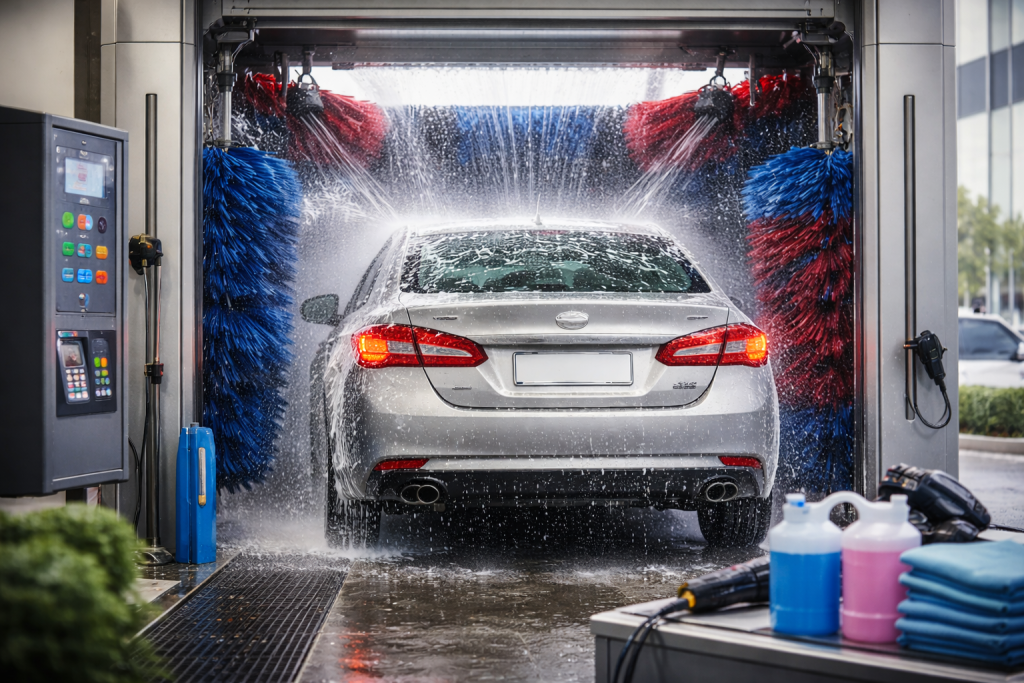
A car auto wash machine is not a single, uniform piece of equipment but a family of mechanical systems designed to solve one specific problem: removing contamination from vehicle surfaces with predictable results and repeatable quality. In practice, the effectiveness of any auto car wash machine depends on how its mechanical design, chemistry delivery, and control logic interact with real-world dirt, paint conditions, and usage patterns. Understanding these interactions is essential, because incorrect assumptions about machine type or capability often lead to premature wear, inconsistent wash quality, or higher long-term operating costs.
Types of car auto wash machines and their mechanical logic
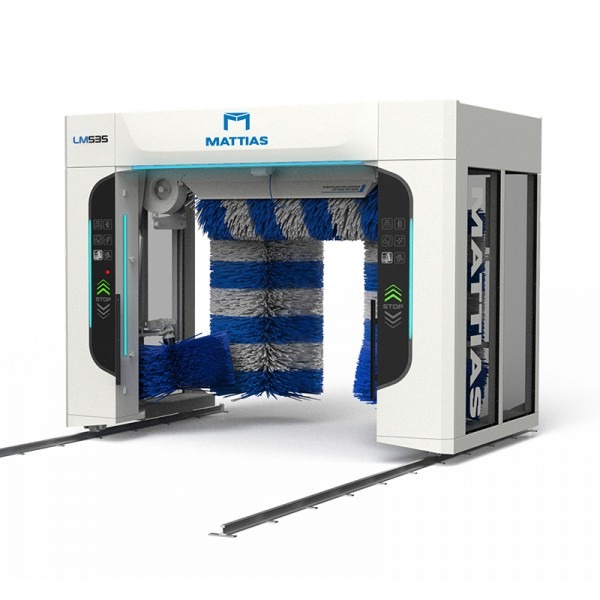
At a structural level, every car wash auto machine is designed around one of three cleaning philosophies: friction-based contact, chemical-and-pressure cleaning, or a hybrid of both. Each approach solves different problems and creates different side effects. The choice is rarely about “better” or “worse” performance in abstract terms, but about how the system behaves over thousands of wash cycles under variable conditions such as vehicle size, paint hardness, and contamination type.
Tunnel (conveyor) systems
Tunnel-based auto car wash machines use a conveyor to move vehicles through a fixed sequence of cleaning stations. From an engineering standpoint, the strength of this system lies in throughput consistency. Once calibrated, the machine repeats the same mechanical actions on every vehicle, which makes results predictable. However, this consistency also means that errors in setup—brush pressure, chemical dwell time, or nozzle alignment—are repeated just as reliably, amplifying small misconfigurations into long-term problems.
In-bay automatic systems
In-bay systems keep the vehicle stationary while the wash gantry moves around it. This design reduces spatial requirements and mechanical complexity, but increases cycle time. In most cases, in-bay machines are more sensitive to sensor calibration, because distance measurements directly affect spray angles and brush pressure. When sensors drift or become contaminated, wash quality degrades unevenly, often without obvious mechanical failure.
Touchless systems
Touchless auto car wash machines rely almost entirely on high-pressure water and chemical action. The absence of physical contact reduces the risk of abrasion, but transfers the cleaning burden to chemistry control and nozzle performance. A common issue is under-cleaning organic films when chemical concentration or dwell time is insufficient, especially in colder climates where reaction rates slow down.
Core components and how they influence wash quality

The performance of a car auto wash machine is rarely determined by one component alone. Instead, it emerges from how brushes, pumps, nozzles, and control systems interact over time. In practice, many wash quality complaints can be traced back to component mismatch rather than outright failure.
Brush materials and wear behavior
Modern brush materials range from foam and closed-cell polyethylene to soft textile filaments. Each material behaves differently under repeated compression and contamination. Foam brushes, for example, distribute pressure evenly but tend to retain grit if not properly rinsed. Textile systems shed debris more effectively but require precise tensioning to avoid uneven contact that can leave streaks or missed areas.
High-pressure pump systems
Pump capacity and pressure stability are critical in both touchless and hybrid machines. Inconsistent pressure leads to uneven soil removal and increases chemical dependency. Over time, cavitation caused by improper inlet conditions can damage pump internals, reducing effective pressure long before a visible failure occurs.
Control systems and automation limits
Modern auto car wash machines rely heavily on PLCs, proximity sensors, and software-defined wash programs. While automation improves repeatability, it also introduces failure modes that are less intuitive than mechanical breakdowns. Sensor drift, software updates, or network interruptions can subtly alter machine behavior without triggering alarms.
Sensor calibration and vehicle profiling
Most systems build a real-time profile of the vehicle using ultrasonic or laser sensors. If calibration shifts, the machine may misjudge vehicle contours, resulting in insufficient cleaning in recessed areas or excessive pressure on protruding components. In most cases, these issues appear gradually, making them harder to diagnose without systematic inspection.
Software-driven wash logic
Wash programs determine sequencing, chemical application timing, and mechanical movement. Small logic errors—such as overlapping spray cycles or incorrect dwell timing—can increase water and chemical consumption without improving cleanliness. Over long periods, this inefficiency directly affects operating cost and component lifespan.
Cost structure and what pricing really reflects
When evaluating auto car wash machine price or overall auto car wash machine cost, it is essential to separate capital expense from lifecycle expense. The sticker price of a car auto wash machine reflects manufacturing complexity and automation level, but says little about how the system will behave after years of daily operation.
Initial pricing often underrepresents the cost of site preparation, electrical upgrades, water treatment integration, and ongoing maintenance. Machines with lower upfront cost may rely on higher chemical usage or more frequent component replacement, shifting expense from capital to operations. In most cases, long-term cost stability matters more than initial savings.
Environmental and utility considerations
Water, energy, and chemical usage are not just regulatory concerns; they directly influence system reliability. A car wash auto machine operating near the limits of its utility capacity is more prone to inconsistent performance and accelerated wear.
Water recycling systems
Reclaim systems reduce water consumption but introduce filtration and storage complexity. Poorly maintained reclaim systems can introduce fine particulates back into the wash cycle, increasing abrasion risk and clogging nozzles. This trade-off must be managed through regular monitoring rather than assumed efficiency.
Common operational errors and their consequences
Many real-world problems arise not from design flaws, but from operational assumptions that do not match actual usage. Understanding these patterns helps prevent predictable failures.
A few recurring issues include:
- Overloading wash programs with unnecessary steps, increasing cycle time without improving results.
- Neglecting routine calibration, leading to gradual performance drift.
- Using aggressive chemicals to compensate for mechanical misalignment.
Each of these errors compounds over time, affecting both wash quality and equipment longevity.
Comparative overview of machine types
The following table summarizes practical differences between major car auto wash machine types. It is intended to clarify trade-offs rather than rank systems by quality.
| Machine type | Space requirement | Cleaning consistency | Maintenance sensitivity | Typical use case |
| Tunnel system | High | Very stable | Moderate | High-volume locations |
| In-bay automatic | Low | Variable | High | Limited-space sites |
| Touchless | Moderate | Chemistry-dependent | Moderate | Paint-sensitive vehicles |
Choosing the best option based on use conditions
Selecting the “best” car auto wash machine depends less on specifications and more on alignment with real operating conditions. Climate, vehicle mix, staffing capability, and maintenance discipline all influence outcomes.
A structured decision process usually involves:
- Defining expected daily throughput and peak loads.
- Assessing available utilities and site constraints.
- Evaluating maintenance resources and technical expertise.
Skipping these steps often results in systems that perform well on paper but struggle in daily operation.
Long-term reliability and concluding observations
A car auto wash machine is ultimately a long-term mechanical system, not a short-term convenience device. Stability, predictability, and controlled wear matter more than peak performance metrics. Machines that are slightly less aggressive but consistently calibrated tend to produce more reliable results over years of use. In practice, understanding limitations and respecting system design boundaries is what allows automated washing equipment to remain effective, economical, and mechanically sound over its full service life.
Comment here