

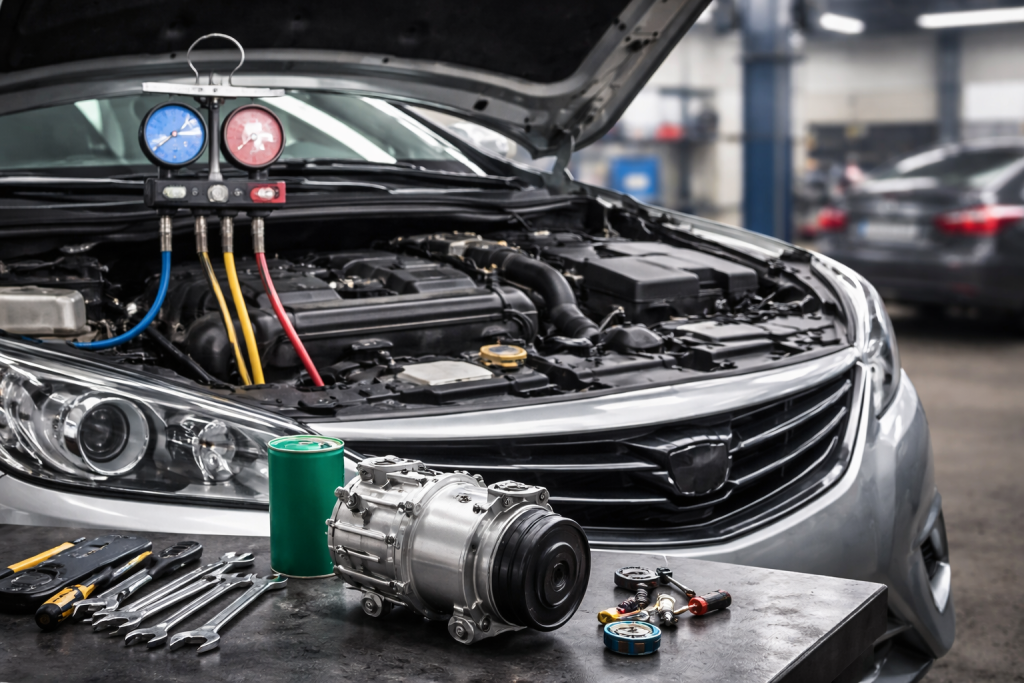
Air conditioning in a modern car is not a comfort extra anymore — it’s a tightly integrated system that affects safety, driver fatigue, and even fuel efficiency. When it stops working, the first question most owners ask is about auto AC repair costs, and the second is whether the repair is truly necessary or just “recommended.”
From a technical standpoint, the cost of auto AC repair depends less on the symptom you notice and more on why the system failed in the first place. Understanding that difference is what usually separates a predictable repair bill from an unpleasant surprise.
How an automotive AC system actually fails
Before discussing how much does auto AC repair cost, it helps to understand how these systems tend to break down in real-world use. Car AC systems operate under high pressure, high temperature, and constant vibration. Over time, even small weaknesses become expensive problems.
In most cases, failure is not sudden. Cooling performance drops gradually, airflow changes, or strange noises appear long before total system shutdown. Ignoring these early signs often increases the final auto AC repair cost.
Common technical failure patterns include:
- Slow refrigerant loss through aging seals and O-rings.
- Internal compressor wear caused by oil contamination.
- Condenser damage from road debris or corrosion.
- Expansion valve or orifice tube blockage due to debris.
Each of these faults has a very different repair path and cost profile.
What determines auto AC repair costs in practice
From a technician’s perspective, auto AC repair costs are driven by diagnosis complexity more than by parts alone. Two cars with the same symptom can require entirely different repairs.
Several variables consistently influence the final bill:
- System design — dual-zone, rear AC, or variable-displacement compressors add complexity.
- Vehicle age — older systems are more prone to cascading failures.
- Refrigerant type — newer refrigerants are more expensive and tightly regulated.
- Access difficulty — labor time varies dramatically by engine layout.
In many cases, labor represents a larger share of the cost to repair auto AC than the component itself.
Diagnostic work: the hidden part of the bill
A common misunderstanding is assuming that diagnosis is trivial. In reality, professional AC diagnostics involve pressure testing, temperature delta measurements, electronic leak detection, and sometimes dye tracing over several days.
A proper diagnostic process usually includes:
- Static and dynamic pressure analysis.
- Electrical testing of clutch or control valves.
- Leak detection under operating pressure.
- Oil condition inspection.
Skipping these steps often leads to partial repairs that temporarily reduce symptoms but don’t address the root cause — a frequent reason for repeat auto AC repair cost complaints.
Auto AC compressor repair cost: why it’s rarely “just the compressor”
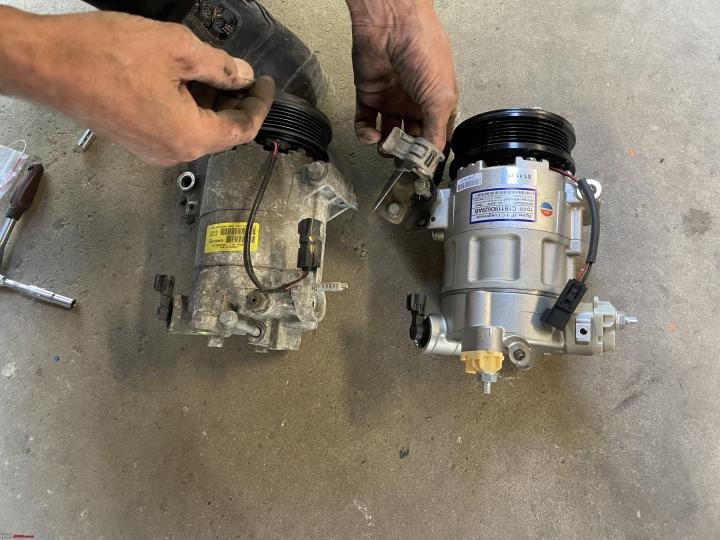
The compressor is the heart of the system, and its failure tends to dominate conversations about auto AC compressor repair cost. However, replacing the compressor alone is rarely sufficient. When a compressor fails internally, it often releases metal particles into the system.
In most cases, proper repair requires:
- Compressor replacement.
- System flushing.
- Receiver-drier or accumulator replacement.
- Expansion valve or orifice tube inspection.
Ignoring these steps may lower the upfront auto AC repair cost, but it significantly increases the risk of repeat failure within months.
Auto AC condenser repair cost and external damage
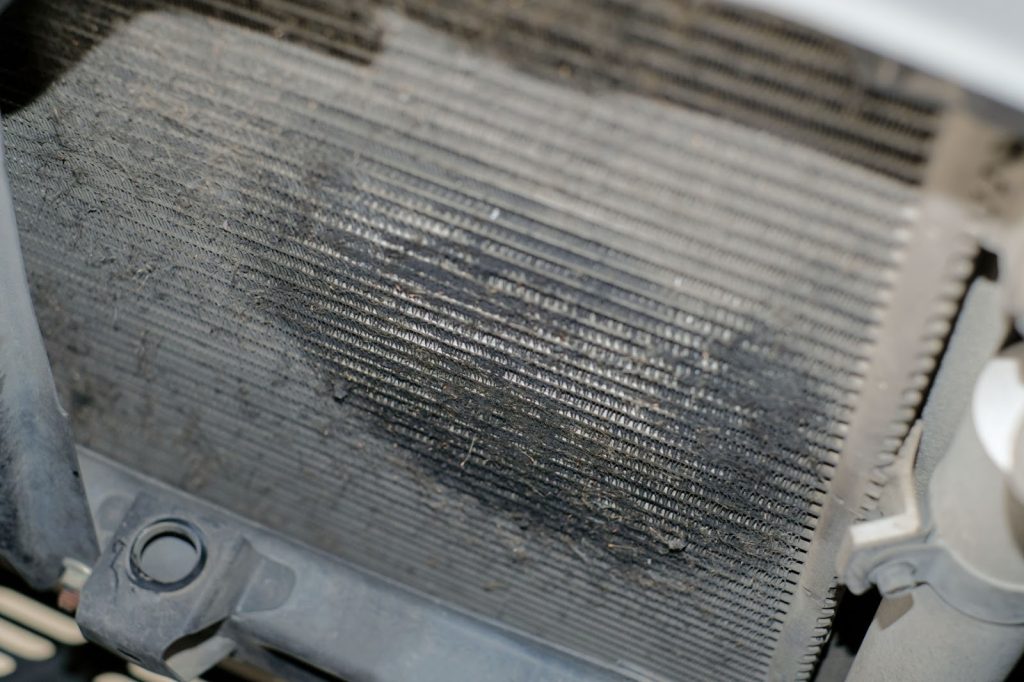
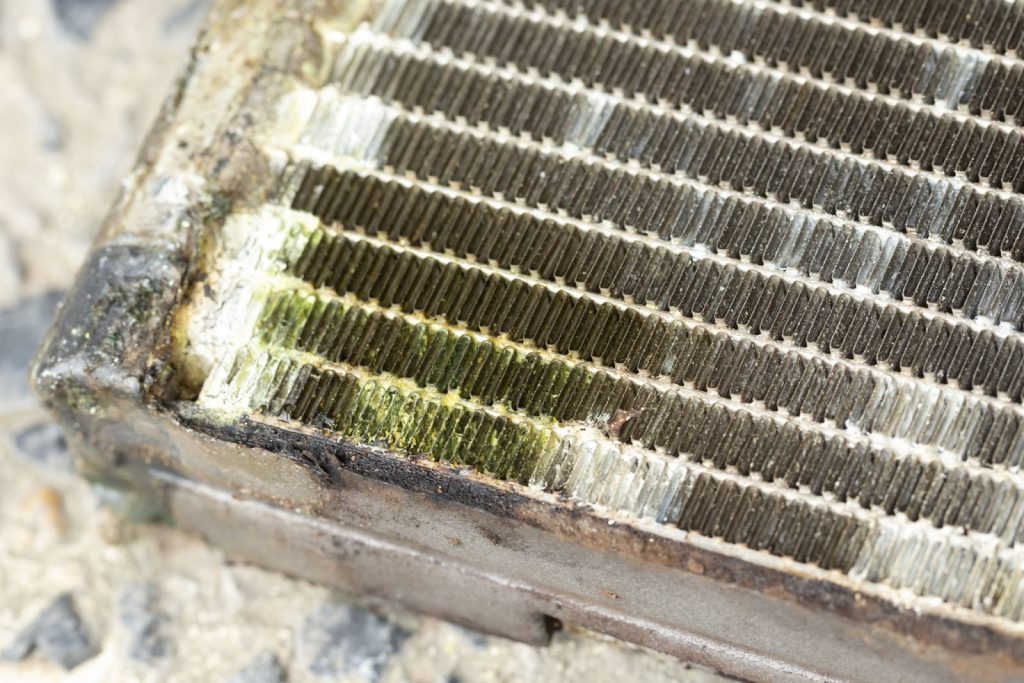
The condenser is exposed to road debris, moisture, and salt. Unlike compressors, condenser failures are often visible but underestimated.
Typical condenser-related issues include:
- Impact damage reducing heat transfer.
- Internal corrosion causing micro-leaks.
- Blockage from degraded desiccant.
Because the condenser sits at the front of the vehicle, replacement may require bumper or grille removal, directly affecting auto AC condenser repair cost through labor time.
Auto AC leak repair cost: small leaks, big consequences
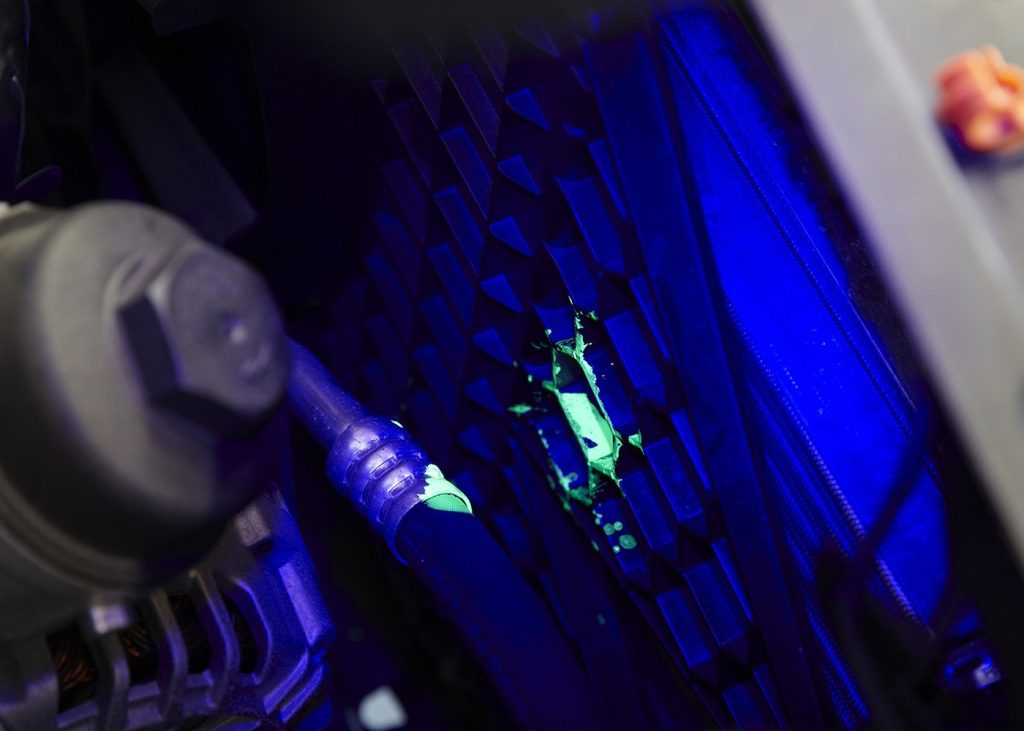
Refrigerant leaks are among the most common reasons owners ask about auto AC leak repair cost. The challenge is that leaks are often slow and invisible.
Common leak sources include:
- Schrader valves.
- Rubber hose crimps.
- Evaporator cores hidden behind dashboards.
In many cases, the leak itself is inexpensive to fix. The cost escalates when refrigerant loss leads to compressor lubrication failure — turning a minor leak into a major cost to repair auto AC.
Comparing typical repair scenarios
The table below helps clarify how different failures translate into different repair scopes. It’s not a price list, but a structural comparison to support realistic expectations.
| Repair scenario | Main components involved | Labor intensity | Cost variability |
| Refrigerant leak repair | Seals, hoses, recharge | Medium | High |
| Compressor failure | Compressor, drier, flush | High | Very high |
| Condenser replacement | Condenser, refrigerant | Medium | Medium |
| Electrical control issue | Sensors, wiring | Low–medium | Medium |
| Preventive service | Inspection, recharge | Low | Low |
This comparison shows why asking “how much does auto AC repair cost” without diagnosis often leads to misleading answers.
How climate and driving habits affect repair costs
Environmental factors play a bigger role than many drivers realize. In hot climates, AC systems operate closer to their thermal limits for longer periods, accelerating wear.
Driving habits also matter:
- Short trips reduce oil circulation in the compressor.
- Long idle periods increase condenser heat soak.
- Infrequent AC use allows seals to dry out.
Over time, these patterns directly influence long-term auto AC repair costs, even on well-maintained vehicles.
Where owners unintentionally increase auto AC repair cost
From workshop experience, many expensive repairs could have been avoided with earlier intervention.
The most common owner-related cost drivers include:
- Recharging refrigerant without fixing leaks.
- Ignoring unusual noises or odors.
- Using stop-leak additives without diagnosis.
These actions may appear cost-effective short-term, but they often contaminate the system and complicate future repairs.
Practical ways to keep costs predictable

While AC systems will eventually require repair, cost volatility can be reduced. The goal is not eliminating repairs, but controlling when and how they happen.
In most cases, cost stability comes from:
- Periodic system performance checks.
- Addressing leaks early.
- Avoiding partial or “temporary” fixes.
- Using correct refrigerant and oil types.
This approach doesn’t eliminate auto AC repair cost, but it keeps repairs incremental rather than catastrophic.
Final perspective: understanding cost is about understanding systems
Auto AC repair costs are rarely random. They follow predictable technical logic tied to system design, operating conditions, and maintenance history. When owners understand why a repair is needed, the cost becomes easier to evaluate and plan for.
In the long term, the most reliable savings don’t come from cheaper parts or shortcuts, but from timely diagnosis and system-level thinking. That’s what keeps automotive AC repairs stable, explainable, and far less stressful over the life of the vehicle.
Comment here